




Our recent event on Addressing Antimicrobial Resistance (AMR) for Improved Veterinary Care brought together leading experts to share insights, research, and practical strategies for tackling AMR in animal health. Through engaging presentations and discussions, participants explored innovative approaches to stewardship, diagnostics, and policy, aiming to safeguard both animal and public health. Thank you to all speakers and attendees for contributing to this important conversation.
Insights into cross political policies to combat AMR
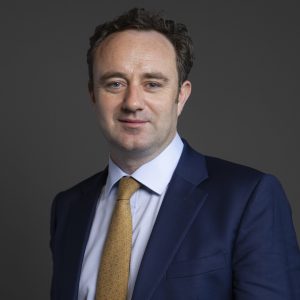
Dr. Danny Chambers- Liberal Democrat MP for Winchester and veterinary surgeon
Dr Danny Chambers is the Liberal Democrat MP for Winchester and veterinary surgeon. He holds an MSc in Epidemiology & Infectious Disease Control and chaired the British Veterinary Association’s working group on Farm Assured Schemes.
With over a decade of experience as a large animal vet, Danny has a strong understanding of the challenges faced in the sector. As an MP, Danny has drawn on his expertise to bring attention to anti-microbial resistance as a matter of national security and serves as secretary of the All-Party Parliamentary Group on AMR.
He has been an advocate for improving the UK’s preparedness for AMR having written on the subject in Nature and national papers.
The australian perspective- how the AMR vet collective is working to engage practitioners and industr
Prof. Jane Heller- Dean of veterinary sciences at charles sturt university; professor in veterinary epidemiology and public health; director at heller consulting pty ltd.
Jane Heller is a Professor in Veterinary Epidemiology and Public Health and Dean of Veterinary Sciences (a shared role) at the School of Agricultural, Environmental and Veterinary Sciences at Charles Sturt University. Professor Heller trained in Epidemiology at the Universities of Sydney (MVetClinStud) and Glasgow (PhD and ECVPH residency) and has worked in academia in Australia since 2009. Jane applies her epidemiological knowledge to many areas but is particularly interested in infectious disease and zoonotic transfer of pathogens, with a focus on antimicrobial resistance and stewardship (AMR and AMS), and Q fever. Jane co-founded the AMR Vet Collective (www.amrvetcollective.com) and associated free online learning program (www.vetams.org), a Not for Profit, developed with the aim of translating the science around AMR and AMS and engaging veterinarians in this space.
AMR from the veterinary and livestock producers' perspective
Dr. mandy nevel- head of animal health and welfare at the agriculture and horticulture development board (AHDB)
Mandy has had over 30 years of veterinary experience in farm animal work. Initially in farm practice, she then completed a PhD then spent time developing vaccines for farm animals. She established a veterinary pathology service and was a senior lecturer at the Royal Veterinary College. Her expertise, and research focus, is in diseases of farm animals and their control including responsible antibiotic use.
AMR and animal welfare- the uK experience
Rebeca Garcia pinillos- veterinary adviser at DEFRA
Rebeca Garcia Pinillos is a Veterinary Adviser at the Department for Environment, Food and Rural Affairs (Defra), specialising in animal welfare policy. She serves as the UK Animal Welfare Focal Point to the World Organisation for Animal Health (WOAH), supporting international collaboration and alignment with global welfare standards. With over 20 years of experience in animal welfare, ethics, law, and veterinary public health, Rebeca has contributed to global initiatives through her work with Defra, UNEP and One Welfare CIC. Her expertise bridges science, ethics, and policy, with a focus on advancing welfare through evidence-based strategies and cross-sector engagement. She plays a key role in connecting UK priorities with international frameworks, helping shape the future of animal welfare both nationally and globally.
Antibiotic use and Stewardship: the future
dr. fraser broadfoot- head of antibiotic use and stewardship team at the veterinary medicines directorate (VMD)
Fraser Broadfoot qualified as a vet from the Royal Veterinary College, London in 2001. He worked in small animal practice for 5 years and then spent 10 years working in the pharmaceutical industry, managing a wide range of small animal and cattle products. He then joined the Antimicrobial Resistance, Surveillance and Policy Team at the Veterinary Medicines Directorate in 2016 and currently head up the Antibiotic Sales, Use and Stewardship Team. This involves collecting antibiotic sales data, working with UK animal sectors to promote and develop systems for the collection of data on antibiotic use and benchmarking, and working alongside UK sector stewardship groups to promote responsible antibiotic use.
antimicrobial resistance in veterinary medicine: challenges and opportunities- an industry perspective
dr. tony simon- director for european scientific affairs and pharmacovigilance at zoetis
Tony Simon spent a number of years in general and specialist veterinary practice in the United Kingdom and has seen spent over 34 years in Pfizer Animal Health, now Zoetis, in a wide range of different veterinary technical roles. He led the UK Technical and Regulatory teams for a number of years before working in international strategic roles based in New York, Paris and Brussels where he contributed to policy discussions relating to veterinary antimicrobials and antimicrobial resistance. He has also been a member of various industry working groups on this topic and was vice-chair of the AnimalHealthEurope AMR Priority Team. Tony is currently Director for European Scientific Affairs and Pharmacovigilance within Zoetis Veterinary Medicines Research & Development.
Abstracts
Development against infections by Escherichia coli: a comprehensive one health approach
ayah Francis- phD student; university of surrey
Ayah is a PhD candidate working under the supervision of Prof. Christine Rollier, Dr. Jai Mehat, Dr. Jorge Gutierrez-Merino, and Prof. Roberto La Ragione. Ayah’s research focuses on the development of Lactiplantibacillus plantarum as a vaccine platform against infections caused by Avian Pathogenic Escherichia coli. Originally from Lebanon, she obtained a Bachelor of Science in Biology from the American University of Beirut, followed by a Master of Science in Molecular Medicine from Imperial College London. After her master’s studies, she contributed to the Gonococcal Vaccine Project at the Jenner Institute, where she evaluated the preclinical immunogenicity of a candidate vaccine. Ayah’s research interests encompass Immunology, Microbiology, and Translational medicine, with a particular emphasis on vaccine development and host–pathogen interactions.
isolation of gram-negative ESKAPE organisms from commercially available raw meat diets for dogs in the uK
dr. genever Morgan- lecturer in small animal clinical skills; university of liverpool
Genever graduated from the University of Liverpool with a Zoology degree in 2008, and went on to complete her veterinary degree at the Royal Veterinary College (RVC) in 2012. Genever worked in a variety of first opinion small animal practices, including at the University of Liverpool and working as a feline shelter vet at the RSPCA/RVC. She completed her PhD at the University of Liverpool in 2023 which investigated antimicrobial resistance and the public health impact of feeding raw meat diets to dogs, and now splits her time between teaching, clinical practice and research as a Lecturer at the University of Liverpool.
the impact of antibiotic use in early life on later life health and performance of thoroughbred racehorses
Dr. joy leng- research fellow; university of surrey
Joy has been involved in animal gut microbiome research for the last 10 years. Her main tool of analysing microbiomes is using bacterial DNA sequencing and bioinformatics. She is currently working as a research fellow at the University of Surrey on a research project exploring the source of the equine gut microbiome in early life. Her previous research has included studying the transfer of antimicrobial research genes within a lab model of the chicken gut, identifying links between early gut microbiome to racing performance in Thoroughbreds and correlating human skin microbiome to emotional wellbeing.
Incubator Companies
fluoretiQ
Dr. Neciah dorh- CEO and co-founder
Neciah is a co-founder and CEO of FluoretiQ, as well as a proud father of 2. He is a former Enterprise Fellow at Quantum Technology Enterprise Centre, where he received business training from Cranfield School of Management. He holds a Ph.D. in Electrical and Electronics Engineering from University of Bristol and member of NHS England Diagnostics Industry Advisory Group (DIAG). He is also the company representative at the British In Vitro Diagnostics Association (BIVDA). Neciah has raised £3.4m in funding and led successful execution of multiple deals (collaboration, license and IP assignment) across several jurisdictions.
Vidiia
Dr. aurora poirier- head of science
Dr Aurore Poirier is Head of Science at Vidiia Ltd, a start-up focused on developing rapid, decentralised diagnostics. She has over a decade of experience in microbiology and molecular diagnostics, with expertise spanning diagnostic design, validation, and scientific communication. From 2021 to 2024, she was a Research Fellow in Molecular Microbiology and Science Communication Officer with the One Health EJP consortium. Working at the University of Surrey since 2018, she contributed to BBSRC and Innovate UK projects, leading collaborations with academic and industry partners to advance novel diagnostic platforms for infectious diseases. Prior to this, she worked at University College London on the development of a biomedical device to treat sepsis. Dr Poirier earned her PhD in Microbiology and Parasitology (2015) and MSc in Biology of Plants and Micro-organisms (2012) at the University of Montpellier, France.
Zonova
Dr. georgia fleet- CEO and Co-Founder
Healthcare-associated infections (HAIs) affect 1 in 10 patients globally, and most are linked to everyday medical devices like catheters and breathing tubes. These devices provide surfaces for bacteria to grow on and enter the body, causing serious complications such as sepsis, pneumonia, and urinary tract infections. As antibiotics lose effectiveness due to antimicrobial resistance (AMR), prevention has never been more urgent. Zonova has developed an antimicrobial technology that, when embedded into device surfaces, creates a continuous protective layer that kills pathogens on contact – including drug-resistant strains like MRSA. This reduces the risk of infection and the need for antibiotics, supporting a One Health future for people, animals, and the environment.
Lorem ipsum dolor sit amet, consectetur adipiscing elit. Ut elit tellus, luctus nec ullamcorper mattis, pulvinar dapibus leo.
Keep track of our LinkedIn page for updates on current and future events!
